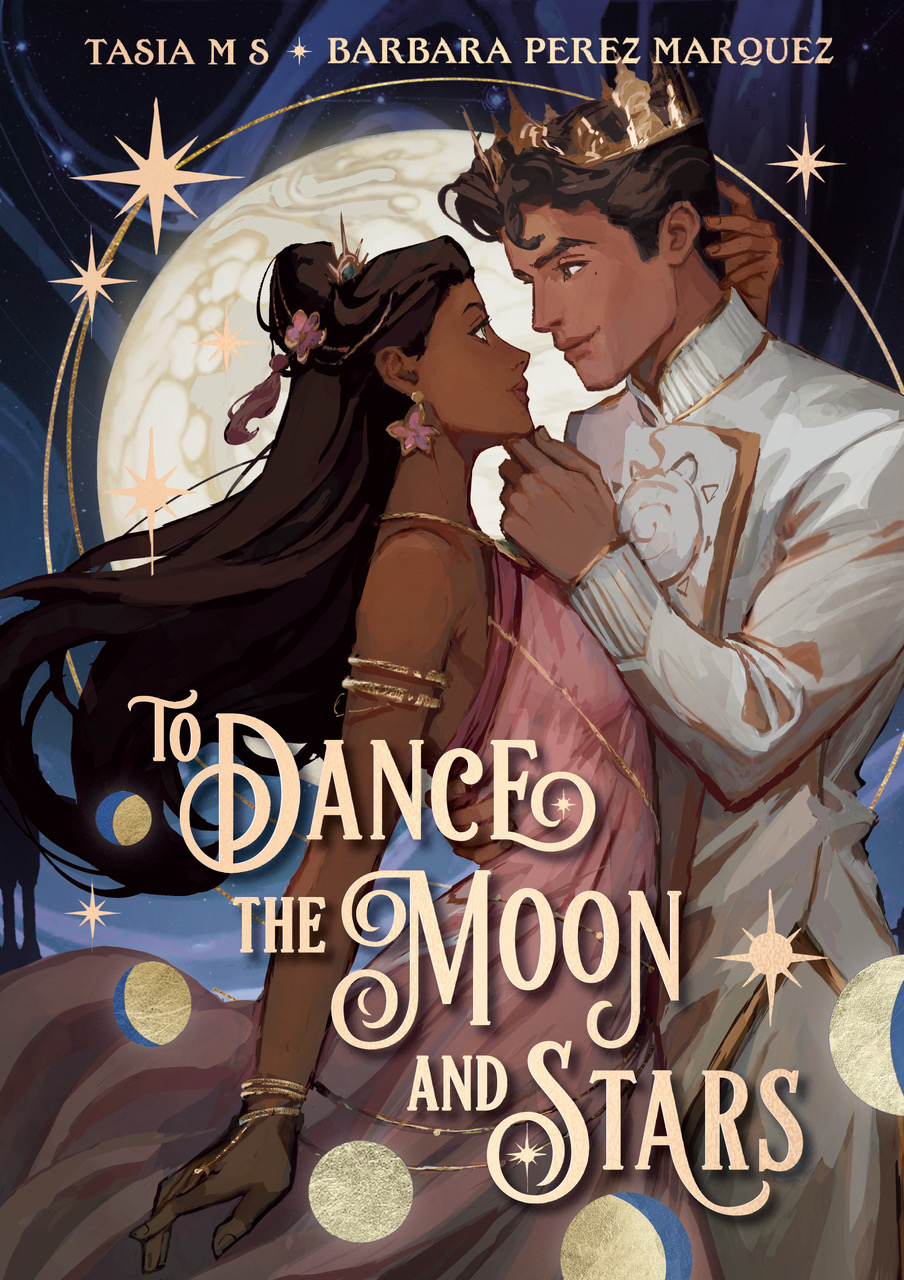
 Concept designer and illustrator Tasia M S and author Barbara Perez Marquez co-created the YA graphic novel To Dance the Moon and Stars. This culturally lush YA romantasy about a young woman, Myra, and her best-friend-turned-love-interest, Eyden, features teens who fear their romance may become verboten. M S and Marquez talk about working collaboratively, teen agency, swoony romance, and inspirations for this graphic novel.
The Writer's Life
Tasia M S and Barbara Perez Marquez: All the Different Facets of Ourselves
Tasia M S is a concept designer and illustrator in South Africa who works across gaming, animation, and publishing. Barbara Perez Marquez was born and raised in the Dominican Republic and now lives in the U.S. The pair co-created the graphic novel To Dance the Moon and Stars (Joy Revolution), a culturally lush romantasy about a young woman, Myra, and her best-friend-turned-love-interest, Eyden, who both fear that their romance may become verboten. Here, M S and Marquez talk about their collaborative methods, teen agency, swoony romance, and the cultural and emotional inspirations for the book.
Let's start with the origins of this graphic novel.
Tasia M S: I started with a core concept of dance being forbidden. The plot was all over the place, but once Barbara joined, the project evolved. We spent almost two years refining the plot, character dynamics, and pacing before I even picked up a pencil to draw. Barbara then took the lead on shaping the comic script.
Barbara Perez Marquez: During the process, we would bounce different scenes back and forth so we could find the most effective moments for the plot and to keep the love story in the spotlight. As co-writer, I also updated dialogue to best serve Tasia's beautiful art.
What was your favorite part about working together on a YA graphic novel?
M S: This was my debut graphic novel, and it felt natural for Myra's story to be YA considering it's a genre that allows characters to experience things like self-discovery and romantic love for the first time. And Barbara gave me so much insight into storytelling.
Marquez: Getting to build the romantic moments together was a great time. We would workshop a lot of Eyden's romantic gestures until they hit the right note. Plus, we got to bring the world of the story to life twice--once when we were ideating it and then again once the pages were finished.
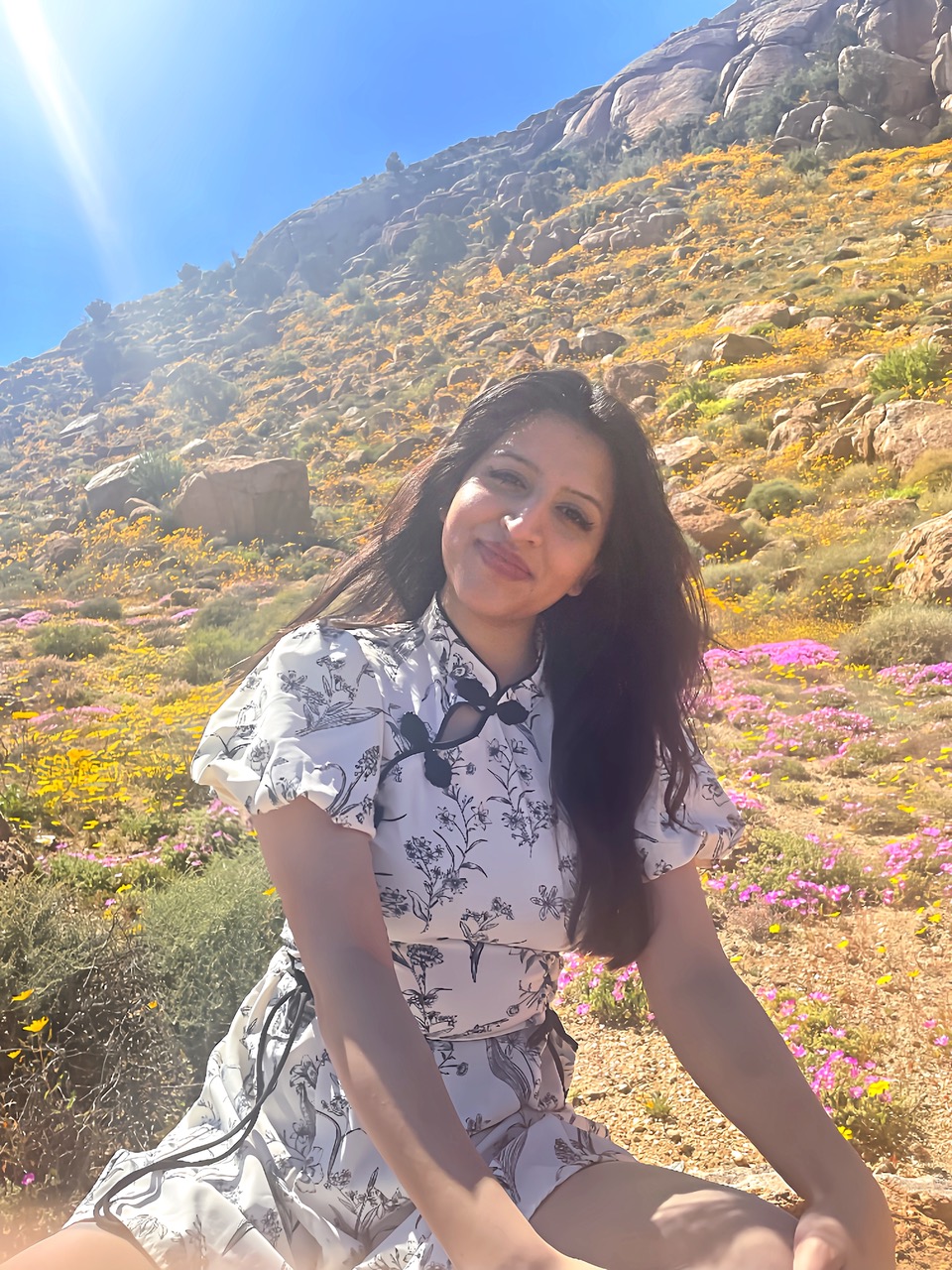 |
Tasia M S
(photo: Faheem Baksha |
Myra and Eyden become easily entranced with one another, it seems, because both want a life free from constraints.
M S: A lot of that part of the story came from my own experiences growing up in a strict religious environment with expectations around who you should be and what kind of life you should live, especially in young adulthood. The tension between duty/family, personal desire, and exploration all became an important part of Myra's journey.
Marquez: Yes, and young adult voices are some of my favorite to write, because characters are in touch-point moments when they're creating the parameters of who they are.
They're adorably rakish together but also quite gentle. Why was it important to you to portray their romance as both sparkling and tender?
Marquez: Both have a lot of rigidity in their lives due to their expected roles and the people around them. That left them with a desire to find something more soft-edged, and they naturally built on the safe space they created for each other as childhood friends.
Their lack of freedom is spectacularly contrasted by Myra's illicit dances against star-speckled skies.
M S: Yes, I've always loved astronomy and celestial imagery. When I was younger, I was very set on becoming an astronomer, until I took physics in high school and realized maybe it wasn't for me after all! But I never lost that fascination with the stars, especially the folklore and mythology different cultures have around them. Religion holds so much beauty and meaning, but it can also feel confining, especially for young people trying to understand themselves. I was really interested in visually exploring that tension. With Myra's dances, I wanted the night sky to feel limitless in contrast to the restrictions surrounding her everyday life.
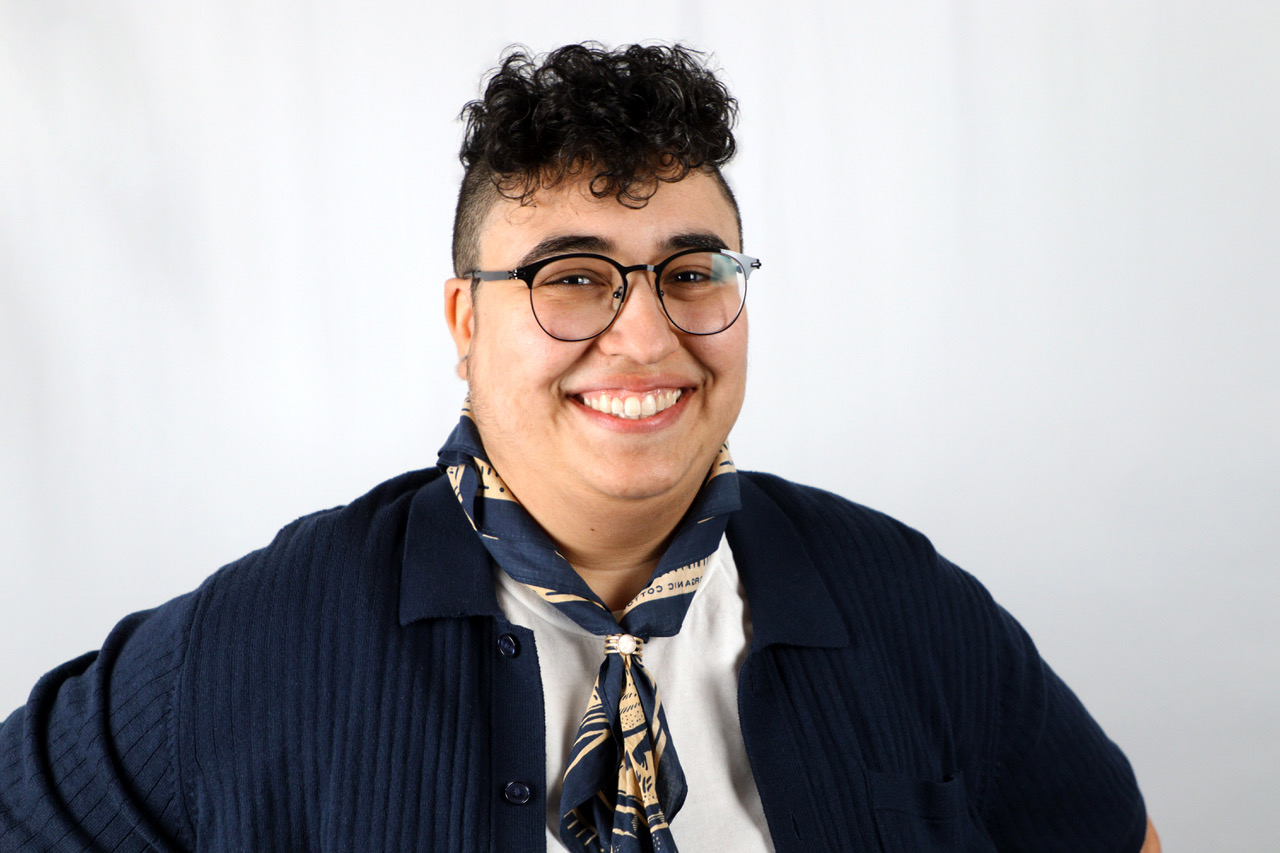 |
| Barbara Perez Marquez(photo: Jason Gitlin) |
And Myra's strong sense of duty leads her to embrace her role in a more powerful way than she expected.
Marquez: Right. I think there's a real question about agency in our lives within the story, and Myra is of course in this impossible situation as things unravel. Ultimately, despite it being the more complex path, sometimes in life we DO want to fight for all the different facets of ourselves. Myra's love for dance didn't mean she cared less about her training as high priestess, and so her task became building a future where she can have both things. This felt particularly important for a YA story, as it gave space for the idea that we can work toward holding different parts of ourselves.
M S: In early versions of the story, Myra and Eyden were going to run away together, but I realized that ending didn't feel true to who Myra was. Myra cares deeply about her faith and wants it to include room for change. So her journey became less about abandoning responsibility and more about redefining it on her own terms. Bringing dance back into the kingdom feels symbolic of that larger goal of preserving culture and spirituality while also challenging the restrictions imposed on her.
Marquez, you grew up in the Dominican Republic; how did your background influence the graphic novel?
Marquez: When writing fantasy, I carry a lot of the myths I grew up with to bring diversity and new angles to what is a very Eurocentric genre. With Eyden's time away from Ipat, I was thinking about what a noncolonized agricultural society would be like and tapped into my own memories of the countryside in the Dominican Republic.
M S, you've shared that you're ancestrally Indian. I couldn't help noticing that influence, especially in the food.
M S: A lot of the visual inspiration for the story came from Indian history. The architecture was inspired by Mughal architecture, and I looked at a lot of temples, mosques, and ancient landmarks while designing the world. Myra's outfits were heavily inspired by sarees and lehengas, while Eyden's clothing draws from kurtas, salwar pants, and mojari shoes. I was intentional about creating a contrast between Myra's clothing and her grandmother's. Historically, in parts of ancient India, sarees were often worn without blouses, but during British colonization, those styles began to be viewed as immodest, leading to more conservative standards of dress. I wanted Myra's style to subtly reflect her reconnecting with an older, freer way of life, while her grandmother visually reinforces a stricter, more conservative worldview.
M S, the way that movement, light, and color play together here is stunning. What was your process?
M S: One technique I leaned on heavily was color scripts, often used in animation to map out the emotional and narrative progression of a story. I wanted the book to feel like it was moving through emotional "color beats," so shifts in lighting, palette, and atmosphere were very intentional. Even when scenes are visually vibrant or dreamy, they're also meant to reflect where the characters are emotionally.
Like the art, Myra's voice flawlessly matched her artistic spirit and the star-crossed teen vibe.
Marquez: Well, I've always been a romantic at heart, but I did quite a few Bridgerton rewatches while working on the script. Additionally, I spent a good amount of time researching dance histories around the world and their cultural connections. --Samantha Zaboski, freelance editor and reviewer













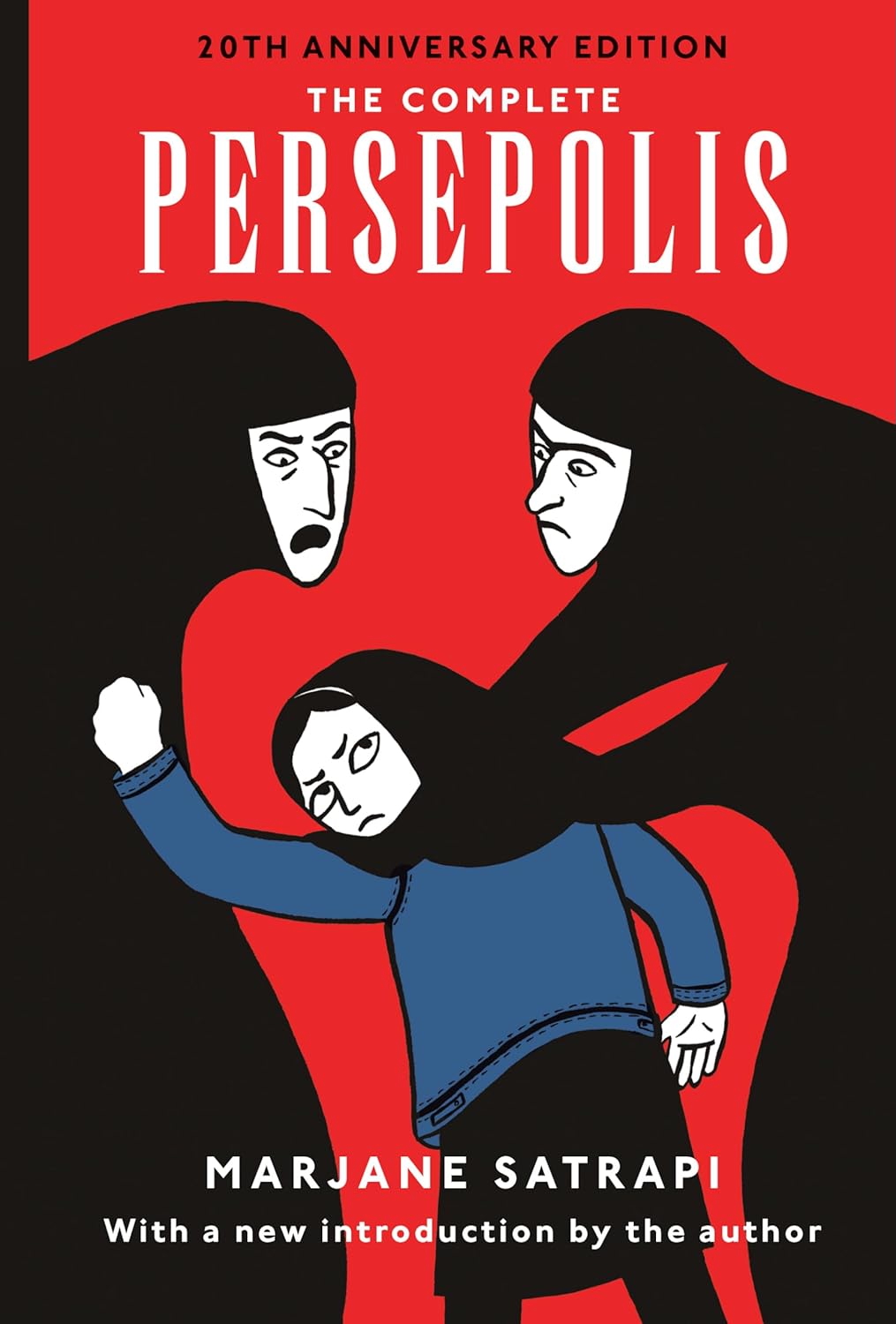 Marjane Satrapi, graphic novelist, film director, and children's book author, died last month at age 56. Born and raised in Iran, Satrapi studied abroad for a time and then moved to France permanently in her early 20s. She was best known for her graphic novels Persepolis and Persepolis 2, which were originally published in French and then appeared in English, published by Pantheon in 2003 and 2004.