

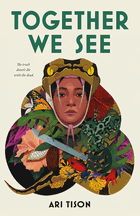
Bribri American poet Ari Tison's sophomore YA novel, Together We See, delivers many of the same stunning attributes that made her debut, Saints of the Household, a Walter Dean Myers Award winner. Tison's radiant prose artfully describes various types of relationships, and she adroitly develops intricate, intertwining kinships that drive a complex plot.
Seventeen-year-old Ulá's "Bush-living" older brother, Kabék, always travels from Bribri territory in Costa Rica to their mother's home in Wisconsin for Christmas. Ulá's father, Andres, doesn't tell Ulá or her mother, Shannon, that he also plans to visit this year. Ulá has a complicated relationship with her Native land-activist father; after Andres and Shannon divorced a decade ago, Andres moved to Bribri territory. He's not present in his "half-Sikua" ("outsider") daughter's life but takes pride in her study of Bribri history and myth "in a look-at-me-I'm-so-great-because-of-my-daughter's-knowledge kind of way." Andres, who recently had a heart attack, is evasive about why he's visiting and equally cagey when he quickly leaves. Then he is dead. The Costa Rican police claim nothing is amiss but Ulá finds a note: "I think someone is coming for me."
Over the course of Ulá and Kabék's four days of traditional mourning in Bribri territory, Tison builds a dramatic murder mystery about corrupt systems, familial ties, and how to "re-matriate" Indigenous land. Ulá's first-person narration is crisp and direct, while a chorus of Bribri ancestors gracefully depict several side characters' experiences. Tison attempts a lot here and isn't entirely effective--there are simply too many ideas--but her short chapters are propulsive and her elegant prose and sophisticated relationships make this novel a worthy read. --Siân Gaetano, children's and YA editor, Shelf Awareness