

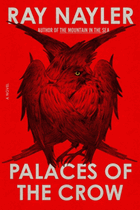
Ray Nayler's Palaces of the Crow brilliantly blends the historical and the speculative to tell the story of four young people and the highly intelligent crows helping them survive the horrors of Nazi occupation. In addition to offering a thrilling plot and indelible characterization, the novel explores animal behavior, evolutionary theory, and the possibility of community care as survival mechanisms more powerful than individual strength and violence.
Nayler (The Mountain in the Sea; The Tusks of Extinction) introduces each character independently in June 1941: Neriya, friends with the crows in her shtetl for years before it is burned; the younger-than-he-appears Czesław, alone after his Red Army unit is decimated; Kezia, a Roma girl who narrowly escapes the German soldiers who kill her family; and "the Boy," abandoned and mute, whom Kezia meets and can't turn away. And then there are the crows: Buster and the thief, Madeleine; the leader, Moses, and so many others, all living out a theory of mutual aid and reciprocity even to those outside their protected group. Once their paths converge, they scrape out some safety in the woods, attempting to escape the violence all around them.
Palaces of the Crow is a stunning novel about warfare and sacrifice, family and identity, and the preservation of collective memory. It's a beautiful, moving reminder of what is possible when people share whatever shelter they have, as Neriya does when she calls out to Kezia and the Boy: "You don't have to stay out there alone. There is room here for both of you." --Sara Beth West, freelance reviewer and librarian