

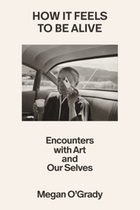
Congratulations to art lovers who have never had someone say to them, "What purpose does art serve?" Critic Megan O'Grady has always embraced conceptual artist Barbara Kruger's observation that art teaches a person, "through a kind of eloquent shorthand, how it feels to be alive." Knowing a good title when she hears one, O'Grady borrows those words for How It Feels to Be Alive, a collection of five essays in which she investigates the way art "provokes unanswerable questions about how to live in a fragmenting society." She has chosen works that raised "questions that still feel urgent to me" and "offered me an eloquent shorthand in an often-incoherent world."
These marvelous pieces follow a similar structure. Each begins by focusing on one artist and then expands into a larger discourse on pressing themes. Her essay on Kruger starts with Kruger's most famous image, Untitled (Your Body Is a Battleground), "depicting a woman's face, bisected into positive and negative exposures." The mother of a young daughter, O'Grady describes how works like Untitled taught her that her body was politicized in ways men's bodies aren't and wonders "how art could meaningfully respond."
The other essays are equally provocative, such as the one on the water bottle decorated with "a sinister image of Flint, Michigan's water plant" by Pope.L, which calls attention to "the racism at play in the systematic undermining of the once-thriving town." How It Feels to Be Alive is a memorable and viscerally elegant treatment of the critical themes it discusses. Know anyone who questions the value of art? Hand them a copy of this book. -- Michael Magras, freelance book reviewer